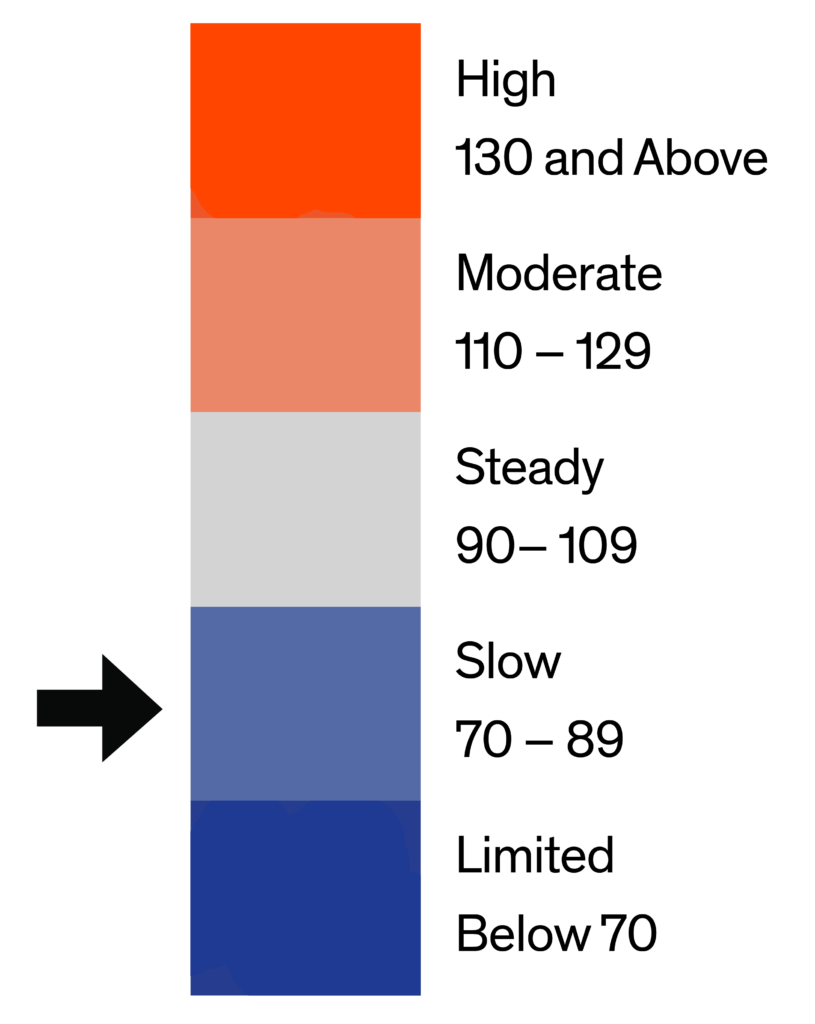
What is the Home Demand Index?

The Home Demand Index (HDI) is the nation’s only local housing market index that tracks pre-sale activity to measure housing market competitiveness. The HDI uses data on pre-sale activities, including in-person showings of homes and views of homes online, to measure housing market activity across different geographies and types of homes. The data used to construct the HDI are the most accurate and up-to-date information from the real estate agents and prospective buyers and sellers that are active in the market.

While most housing market indices are based on history, the HDI provides forward-looking insights to real estate professionals and consumers to help make better decisions in a rapidly changing real estate market

Embed this tile on your site (links update monthly).

Greater Metropolitan Market Areas

The Bright MLS |T3 Home Demand Index currently covers the three greater metropolitan market areas served by Bright MLS, namely the Greater Philadelphia Area (in blue), the Greater Washington D.C. Area (in gray), and the Greater Baltimore Area (in orange). Colors are provided for visual identification of each market area and do not correlate to index activity level. Make a selection on the map to go to the report for a market area or view an overview of each market area here..
Bright MLS | T3 Home Demand Index

www.homedemandindex.com

Washington D.C. | April 2026

Home Demand Index

The Home Demand Index (HDI) for the Washington DC metro area stands at 91 for this report period, up from 78 last month but still below the 98 recorded during the same period one year ago. The thirteen-point month-over-month gain signals a strong spring rebound in buyer activity, marking a shift from the slower winter months to a more dynamic market. This significant improvement suggests that pent-up demand is converting into active market engagement. However, the seven-point year-over-year deficit indicates that the DC market has yet to fully recover to last year’s level. Despite this, the current pace of recovery, supported by the region’s resilient demand fundamentals, points to the potential for further alignment with prior-year benchmarks as peak season conditions develop.
Demand by home type in the Washington DC metro shows broad-based spring improvement this period, with all segments posting month-over-month gains and several approaching prior-year levels. Entry-level single-family homes rose to 83 from 77 last month but remain slightly below last year’s level, signaling improving first-time buyer engagement. Mid-range single-family homes advanced to 77 from 63 last month but also trail last year’s level, reflecting steady spring momentum in move-up activity that has not yet fully returned to prior-year pace. High-end single-family homes climbed sharply to 110 from 80 last month but remain well below last year’s elevated level, indicating a strong seasonal reactivation in luxury demand while discretionary sensitivity continues to influence year-over-year performance in this segment. Entry-level condos increased to 115 from 102 last month and remain slightly below last year’s level, continuing to serve as a key affordability outlet in a high-cost market where attached housing remains a primary entry point for buyers. High-end condos rose to 119 from 114 last month but are meaningfully below last year’s level, suggesting improving momentum but a slower recovery in premium attached demand relative to prior-cycle conditions. Townhouses, rowhouses, and twin homes advanced to 93 from 82 last month but remain modestly below last year’s level, reflecting solid spring reactivation in a segment that continues to benefit from its balance of space, location efficiency, and relative affordability across the metro.
Monthly Statistics for April 2026
Home Demand
Index
91
(Steady)
Home Demand Index
from prior month
78
Home Demand Index
from prior year
98
Index change
from prior month
16.7%
Index change from
same time last year
-7.1%
Bright MLS | T3 Home Demand Index

www.homedemandindex.com

Philadelphia | April 2026

Home Demand Index

The Home Demand Index (HDI) for the Philadelphia metro area stands at 80 for this report period, up substantially from 65 last month but below the 88 recorded during the same period one year ago. The fifteen-point month-over-month surge reflects a decisive spring reactivation in buyer engagement, marking the strongest sequential improvement in several reporting cycles and signaling that pent-up demand deferred through the winter is now converting into active market participation. The eight-point year-over-year deficit indicates the Philadelphia market has not yet fully closed the gap with last April’s activity level, with affordability constraints and financing sensitivity continuing to temper the pace of demand recovery even as the seasonal tailwind strengthens.
Demand by home type in Philadelphia shows broad-based spring improvement this period, with all segments posting month-over-month gains and several approaching or matching year-ago levels. Entry-level single-family homes rose to 75 from 62 last month but remain below last year’s 87, signaling improving first-time buyer engagement, though affordability in one of the region’s structurally elevated price environments continues to constrain full demand recovery. Mid-range single-family homes advanced to 68 from 55 last month but trail last year’s 76, pointing to move-up activity that is building spring momentum without yet reaching prior-year pace. Luxury single-family homes climbed to 60 from 39 last month but remain well below last year’s 73, indicating selective high-end re-engagement as spring inventory enters the market while year-over-year hesitancy persists in the region’s most discretionary tier—likely influenced by the area’s sensitivity to federal employment dynamics and policy-driven household mobility. Entry-level condos advanced to 114 from 97 last month, slightly below last year’s 118, continuing to serve as a compelling affordability alternative in one of the nation’s most expensive housing markets where the price gap between attached and detached products remains a primary driver of buyer composition. Luxury condos rose to 127 from 93 last month but trail last year’s 128 by just one point, effectively reaching year-over-year parity and signaling that premium attached demand has recovered more completely than any other segment. Townhouses and twin homes advanced to 92 from 78 last month but remain below last year’s 99, reflecting strong spring reactivation in a category that consistently benefits from its combination of space, location, and relative price efficiency across the region’s diverse submarkets.
Monthly Statistics for April 2026
Home Demand
Index
80
(Slow)
Home Demand Index
from prior month
65
Home Demand Index
from prior year
88
Index change
from prior month
23.1%
Index change from
same time last year
-9.1%
Bright MLS | T3 Home Demand Index

www.homedemandindex.com

Baltimore | April 2026

Home Demand Index

The Home Demand Index (HDI) for the Baltimore metro area stands at 86 for this report period, up notably from 76 last month but below the 93 recorded during the same period one year ago. This meaningful month-over-month acceleration signals a decisive spring reactivation in buyer engagement, consistent with Baltimore’s historical pattern of demand strengthening through April as seasonal inventory and buyer urgency converge. Despite the annual shortfall, the rebound suggests improving momentum, indicating that the affordability and rate headwinds that suppressed activity through the winter are beginning to ease as conditions stabilize.
Demand by home type in Baltimore shows broad-based improvement this period, with most segments posting meaningful month-over-month gains as spring buyer activity accelerates, though all segments remain below year-ago levels. Entry-level single-family homes registered an index of 71, up from 69 last month and below the 76 posted one year ago, reflecting improving first-time buyer engagement though affordability constraints continue to cap the pace of recovery in this rate-sensitive tier. Mid-range single-family homes advanced to 80 from 67 last month, but remain below last year’s reading of 88, suggesting move-up buyer activity is building meaningful spring momentum after a subdued winter. Luxury single-family homes climbed to 84 from 70 last month, but remain below last year’s 104, pointing to selective but expanding high-end engagement as spring inventory enters the market. Entry-level condos rose to 116 from 110 last month, but remain below last year’s 136, reinforcing their position as the most consistently active demand tier in the metro and a primary affordability alternative for buyers navigating constrained detached home budgets. Luxury condos advanced to 149 from 114 last month, though still trailing last year’s 160, as the high-end attached segment continues to normalize following an elevated prior-spring period that may have pulled forward activity. Townhouses, rowhouses, and twin homes rose strongly to 94 from 85 last month, slightly below last year’s 98, signaling that this segment is nearing prior-spring demand levels and is benefiting robustly from spring buyer reactivation.
Monthly Statistics for April 2026
Home Demand
Index
86
(Slow)
Home Demand Index
from prior month
76
Home Demand Index
from prior year
93
Index change
from prior month
13.2%
Index change from
same time last year
-7.5%
Bright MLS | T3 Home Demand Index

www.homedemandindex.com